
Fuzzy's Friday Feed
Pet industry news, decoded for the pros in the trenches.

Five stories landed in the pet industry this week that deserve more than a scroll-past. Each one below includes a fast summary, what it actually means for your business, and concrete ways to use the information. Fuzzy has already claimed the good chair. Let's get into it
VET CARE NOW COSTS UP TO $60,000 OVER A PET'S LIFETIME. 40% OF OWNERS ARE

THE STORY
Veterinary care inflation has climbed 44% since 2019, and the pressure is showing up directly at the exam room door. According to a 2026 survey of 1,000 pet owners conducted by Dutch, two out of five pet owners are now skipping or declining veterinary care due to cost or access. Of those who did pay for care, 33% reported skipping meals or cutting back on groceries to cover the bill. The Forbes piece frames pet insurance and telehealth as the emerging solutions to a gap that is only widening.
WHAT THIS MEANS FOR PET PROS
Your clients are financially stressed in ways they may not be telling you directly. That stress does not just affect how often they visit the vet. It affects how often they book grooming appointments, whether they continue training, and whether they re-up with their dog walker when money gets tight. Understanding the financial pressure your clients are under is not just empathy. It is business intelligence. The pet pros who acknowledge this reality in their content and their client communication will build more trust than those who keep operating as though nothing has changed.
HOW TO USE THIS INFORMATION
If you have not addressed the cost conversation with your audience directly, now is the time. A post that acknowledges the financial reality of pet ownership, without being preachy, positions you as someone who lives in the real world with your clients.
Review your service packages. Are there entry-level or maintenance options that give cost-conscious clients a way to stay connected to your business rather than disappearing entirely?
For veterinary practices: this data is an argument for proactive client education on pet insurance before a crisis hits. If you are not having that conversation at wellness visits, someone else will have it for you, probably after the emergency.
For trainers, groomers, and sitters: consider whether a simple loyalty or prepay option could help clients budget for your services predictably rather than treating each appointment as a separate financial decision.
CONTENT SPARK
Content idea: "What I tell every new pet parent about planning ahead for vet costs." A veterinary professional, trainer, or groomer who speaks plainly about the financial reality of pet ownership, and offers one actionable tip, will earn immediate trust with a nervous new pet parent audience
AMERICAN PET OWNERS ARE CROSSING THE BORDER INTO MEXICO FOR VET CARE
Source: Vet Candy

A story that originated in New York Magazine and has since spread across the veterinary trade press is documenting a phenomenon that is no longer fringe: pet owners in California are driving to Tijuana for veterinary care they cannot afford at home. One owner had two teeth extracted and a neuter procedure done for around $800, less than half of what she was quoted in Los Angeles. Another paid under $180 for an abscess drainage and vaccines for two dogs combined, after being told she needed $8,000 just for diagnostics stateside. The demand is significant enough that concierge shuttle businesses have emerged. One operation now runs seven vehicles with eleven full-time employees making multiple daily border trips each day. Vet Candy frames the issue directly: this is a market responding to a real and growing access crisis, accelerated by private equity consolidation in veterinary medicine.
WHAT THIS MEANS FOR PET PROS
This story is not just about California or the border. It is a signal about what happens when the gap between pet owner need and affordable access gets wide enough. Clients are resourceful. They will find solutions. For independent pet care professionals, the lesson here is both a warning and an opportunity. The warning: if your pricing or communication makes clients feel like they cannot afford to show up, they will quietly find another way. The opportunity: independent, relationship-based pet care businesses are exactly the alternative clients are looking for when they feel priced out of the corporate model. Your independence is a feature right now, not a liability.
HOW TO USE THIS INFORMATION
Talk openly about being an independent business. Pet parents who are burned out on corporate veterinary chains and big-box pet retailers are actively seeking out local, human-scale alternatives. Make that easy for them to find in your marketing.
If you offer payment plans, packages, or any kind of flexible pricing, make those visible on your website and in your social content. Do not make clients ask.
For veterinary professionals specifically: this story is worth sharing with your own audience, not defensively, but as an opening to a real conversation about access, affordability, and what your practice is doing to stay reachable.
Consider partnering with a local low-cost clinic, humane society, or veterinary school program and mentioning that relationship to clients. Even if you cannot solve the affordability problem yourself, being the pro who points clients toward resources builds loyalty that lasts.
CONTENT SPARK
Content idea: "What to do when you cannot afford a vet visit right now." A non-judgmental, resource-forward post that gives pet parents real options: payment plans, telehealth, low-cost clinics, and preventive care that reduces emergencies. It positions you as a trusted guide rather than a salesperson.
PET RETAIL CUSTOMERS ARE NOT JUST SHOPPERS ANYMORE. YOUR BUSINESS NEEDS TO CATCH UP
Source: Pets+ Magazine

THE STORY
Mike Karsting, Senior Vice President of the World Pet Association, published a piece ahead of SuperZoo 2026 outlining four major shifts in pet retail consumer behavior that every store owner, and frankly every pet care professional, needs to understand. The four shifts: the move from pet owner to pet parent identity, a surge in wellness and preventive care purchasing, the rise of subscription and auto-ship models as a baseline expectation, and the growing demand for in-store experiences rather than simple transactions. Karsting notes that today's pet parents research ingredients, seek informed recommendations, and expect the businesses they patronize to meet them there.
WHAT THIS MEANS FOR PET PROS
This piece is written for pet retailers, but the underlying shifts apply to every service-based pet business. Your clients are arriving with more research, higher expectations, and a stronger emotional investment in their pet's wellbeing than any previous generation of pet owners. That is not a burden. It is an enormous opportunity. The pet pros who position themselves as knowledgeable, trustworthy guides rather than transactional service providers are the ones building the businesses that last. The bar for client education, community, and differentiated service has never been higher, and the professionals who clear it will have more loyal clients than they know what to do with.
HOW TO USE THIS INFORMATION
Audit your client communication. Does it treat clients as informed, engaged partners in their pet's care, or does it talk down to them or give them generic information they could find anywhere? Close that gap.
Consider whether you offer any form of recurring service, maintenance plan, or membership that gives clients the subscription-style convenience and loyalty rewards they are now conditioned to expect. Even something simple can shift a one-time client into a long-term one.
Think about the experience your business creates, not just the service it delivers. What do clients feel when they walk in, send a message, or read your content? That feeling is your brand.
If wellness and preventive care are part of what you offer or advocate for, make that visible and specific in your marketing. Vague language about "caring for the whole pet" lands less than a concrete example of how you practice it.
CONTENT SPARK
Content idea: "What I ask every new client before their first appointment." A behind-the-scenes look at your intake or onboarding process signals professionalism, personalizes your brand, and tells prospective clients exactly what to expect from working with you.
THE U.S. PET INDUSTRY HIT $158 BILLION IN 2025. YOUR CLIENTS ARE STILL SPENDING, JUST MORE CAREFULLY.
Source: Pet Age / APPA

THE STORY
The American Pet Products Association's 2026 State of the Industry Report confirmed that U.S. pet industry expenditures reached $158 billion in 2025, a 3.7% increase over the prior year, with full-year 2026 growth projected at 4.4% and total spending projected to hit $165 billion. Dog ownership expanded from 51% to 53% of U.S. households year over year, adding roughly 4 million new dog-owning households. Growth is being led by Gen Z, Millennials, and Gen X, but spending is increasingly value-oriented across the board. The headline number is healthy. The nuance underneath it is where the business intelligence lives.
WHAT THIS MEANS FOR PET PROS
The industry is not contracting. It is recalibrating. Clients are not walking away from professional pet care; they are making more intentional decisions about where they spend. That means the pet pros who clearly communicate their value, build trust through consistent education and visibility, and create genuine relationships with their clients will continue to grow. The ones who assume clients will just keep showing up without any effort to earn and retain that loyalty will feel the recalibration more sharply. This is a market that rewards professionalism and penalizes invisibility.
HOW TO USE THIS INFORMATION
If you have not reviewed your pricing and service offerings in the past year, do it now. The market is growing. Your pricing should reflect your expertise and the current demand environment.
Gen X is a significantly underserved audience in pet industry marketing, and the APPA data shows they are actively expanding their pet households. If your content speaks almost exclusively to younger audiences, you are leaving a high-value segment on the table.
Use the industry growth story in your own marketing. Pet ownership is expanding, professional care is in demand, and your business is part of a thriving sector. That is a confidence signal worth sharing.
Pay attention to how value-conscious clients are making decisions. If you offer premium services, make the value proposition explicit and specific. "This is what you get, and this is why it matters for your pet" closes the gap between hesitation and booking.
CONTENT SPARK
Content idea: "Why I believe this is the best time in history to be a pet care professional." A personal, opinion-forward piece or reel that tells your story, references the industry moment, and invites your audience into your perspective. Authority content at its best.
GROOMING IS A HEALTH ISSUE, NOT JUST A COSMETIC ONE
Source: Today's Veterinary Nurse, March 2026
THE STORY
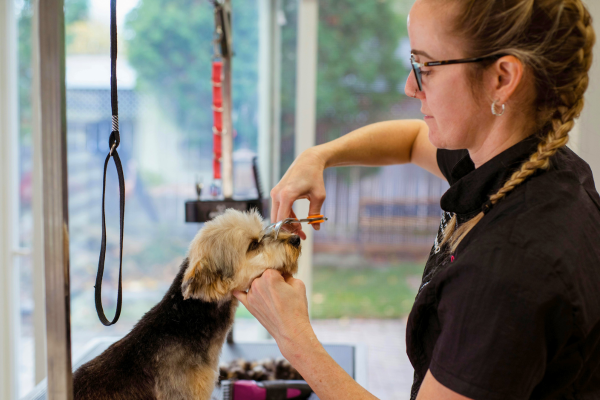
A piece in Today's Veterinary Nurse makes the case that grooming neglect is a health and welfare concern, not merely an aesthetic one, and argues that veterinary teams should be screening for it as part of routine care. The article calls on veterinary nurses specifically to recognize signs of grooming neglect and treat professional grooming as a healthcare referral, positioning groomers as partners in preventive animal health.
WHAT THIS MEANS FOR PET PROS
Groomers have been saying this for years. Now veterinary medicine is saying it in print — and that changes your positioning entirely. If you are a groomer, this article is your credential. The veterinary profession is beginning to formalize what you already know: that what you do is clinical, not cosmetic. This is a moment to update your language, your referral relationships, and how you present your expertise to both clients and veterinary partners.
HOW TO USE THIS INFORMATION
Update the language on your website and intake materials. Shift away from purely aesthetic framing ('your dog will look great') toward health framing ('regular grooming lets us spot early signs of skin issues, ear infections, and more').
Reach out to one veterinary practice in your area this month to introduce yourself as a grooming partner. Bring a simple one-pager that explains your process and what health observations you make and report to owners.
Create content that educates pet owners on what grooming neglect actually looks like and the health consequences — matting, skin infections, overgrown nails affecting gait. You are not fear-mongering; you are informing.
Consider adding a simple health observation note to your post-groom communication. Something like: 'During today's groom we noticed X — you may want to mention this to your vet.' This one habit positions you as a health partner, not just a stylist.
CONTENT SPARK
Content idea: 'Five things your groomer notices that your vet will want to know.' Highly shareable, builds cross-referral credibility, and elevates the entire profession.
